
Law & Crime Plus
Law & CrimeNews & Magazines
3.374.00 Reviews
- Version
- Varies With Device
- Installs
- 50.00K
- Age Rating
- Everyone
Screenshots
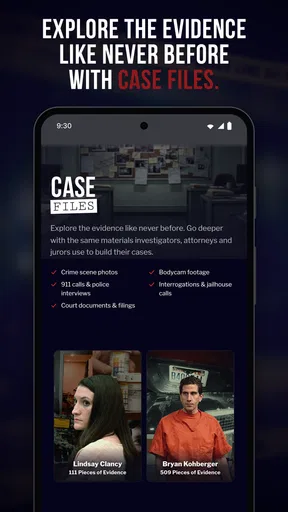


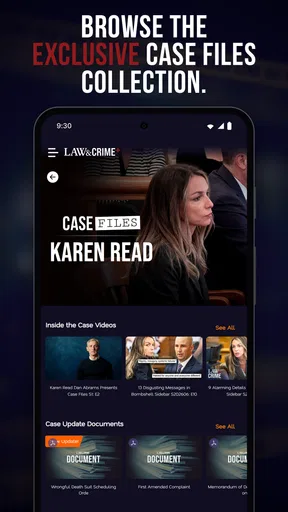
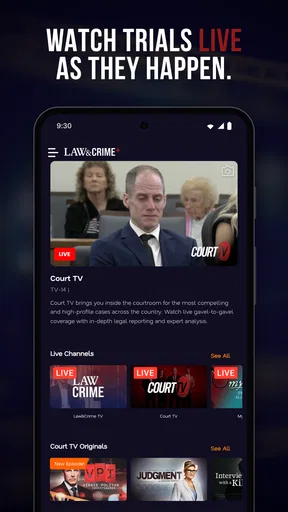

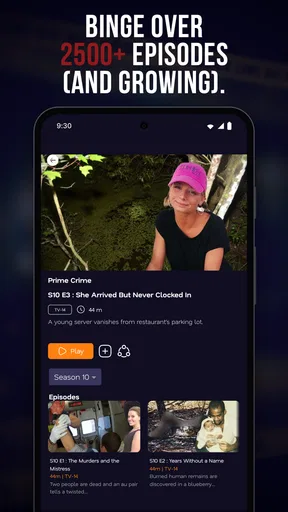
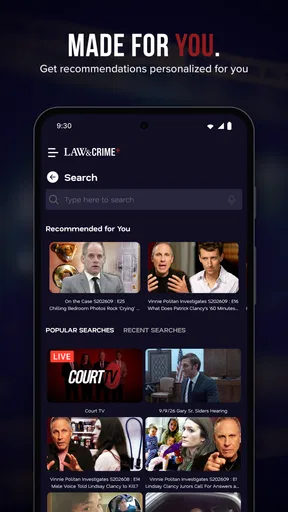
Our Review of Law & Crime Plus
 Analysis by Appyee
If you are curious about courtroom stories but do not want to sort through legal jargon on your own, Law & Crime Plus is an interesting place to start. I found it most useful as a focused news and magazine app for following law-related coverage, especially when I wanted more context than a short headline usually provides. It is free to install, aimed at everyone, and developed by Law & Crime.
My first impression was that this is not trying to be a general-purpose news reader. Its subject is narrower: the intriguing world of law, trials, and the questions that surround them. That focus can be a real advantage if you regularly follow court cases. It can also feel limiting if you mainly want politics, business, sports, local reporting, or a broad daily briefing.
Getting from installation to a useful first read
The app has been available since March 6, 2018, and its presence on Android is established, with over 50 thousand installs. Its average rating is 3.3 from around 200 ratings, so I would approach it with realistic expectations rather than assuming it will suit every reader. The store also shows several dozen written reviews, which suggests that people have had noticeably different experiences with it.
After installing, I would begin with one case or legal topic that already interests you instead of trying to consume everything at once. That makes the first session more rewarding because you have a question in mind: What happened in court? Why does a charge matter? What could happen next? A focused starting point helps the app’s analysis become useful rather than just another stream of headlines.
The name “Plus” may lead some people to expect a large, all-purpose subscription service. I think it is better understood as a dedicated companion for law coverage. The store summary presents it as bringing common-sense analysis to legal stories, and that is the lens I used while judging it. The value is less about replacing every news source and more about helping a reader follow complicated events without feeling completely lost.
One practical tip is to treat each article as a starting point for understanding, not as the only source you need for a serious legal decision. News analysis can explain public events, courtroom developments, and the language used around a case. It should not replace advice from a qualified lawyer when your own rights, finances, or legal responsibilities are involved.
What the first session feels like
For a new user, the main challenge is deciding what deserves attention. Legal coverage often contains names, procedural terms, allegations, rulings, and competing interpretations in the same story. I get more from the app when I read slowly enough to separate three things: what has happened, what someone claims happened, and what remains unresolved.
That reading habit is more important here than quickly scrolling through a long list. A courtroom story can sound conclusive even when a case is still developing. I found that asking myself whether a sentence describes an allegation, evidence, a legal argument, or a final decision made the coverage easier to understand and reduced the risk of jumping to conclusions.
The app is particularly appealing to readers who enjoy the human side of legal news. A trial is not only a sequence of legal terms; it can involve family conflict, public pressure, investigative questions, and difficult moral choices. Law & Crime Plus gives that kind of subject a dedicated home instead of making it compete with unrelated stories in a general news feed.
At the same time, readers who want a formal legal database may find the experience too journalistic. If your goal is to inspect statutes, compare court opinions, or conduct professional research, a specialist legal resource will usually be a better fit. This app makes more sense for staying informed and building context than for doing authoritative legal work.
How I would set it up for a first-time reader
I recommend starting with a short, deliberate routine. Open the app when you have enough time to read one complete story, choose a topic you recognize, and note the names and legal terms that appear repeatedly. On a second visit, return to the same subject rather than immediately switching to something unrelated. That simple workflow turns scattered reading into a developing understanding of the case.
If you are using it during a commute or a short break, decide in advance whether you want a quick update or deeper analysis. A quick visit is useful for seeing what has changed. A longer visit is better for understanding why the change matters. Mixing those two purposes can make the app feel either too shallow or too demanding, even though the real issue is the way the session is being used.
I also suggest keeping a neutral attitude toward emotionally charged coverage. Law-related stories can encourage strong reactions, especially when the people involved are well known or the allegations are disturbing. I try to distinguish the app’s explanation from my own assumptions. That is a small but important discipline when reading any legal news source.
There is also a financial point to consider before you settle into regular use. The app is free, but in-app purchases are listed from $0.99 to $40.99 per item. I would check what a purchase unlocks and whether it matches the way I plan to use the service before paying. A person who only wants occasional reading may not get the same value as someone who follows legal coverage frequently.
Because the app is rated for everyone, it is approachable for a broad audience. That does not mean every legal story will be comfortable for every reader. The subject matter itself can involve crime, victims, accusations, and upsetting events, so parents and younger users should still use their own judgment about what they read.
The first meaningful success: understanding one case
For me, the first successful action is not installing the app or opening a headline. It is finishing one article and being able to explain the basic situation in plain language. I would aim to answer four questions: who is involved, what event is being discussed, what legal issue is central, and what remains uncertain.
Once I can answer those questions, I look for a second piece about the same subject and compare what has changed. This is where a focused law app can outperform a general news feed. A broad app may show one update and then move on to politics or entertainment. A specialist source encourages me to stay with the legal thread long enough to understand its direction.
A useful note-taking method is to write two brief lists while reading. In the first, record confirmed developments such as a hearing, ruling, filing, or public statement. In the second, record predictions and arguments. Keeping those categories separate helps prevent analysis from blending into fact, which is one of the easiest mistakes to make with fast-moving court coverage.
This approach also makes the app more useful for everyday conversations. If a friend mentions a high-profile case, I can use the coverage to understand the basic legal background before discussing it. I do not need to memorize every name or date. I only need a clear sense of what is established, what is disputed, and why the story matters.
Another realistic scenario is preparing for a news-heavy morning. I might open the app with coffee, read one central report, and then decide whether the issue deserves more attention later. That is a better use than endlessly refreshing the screen. Legal stories often develop over time, and repeatedly checking without reading carefully can create anxiety without adding understanding.
Where new users may become confused
The biggest source of confusion is the difference between analysis and an official legal outcome. A clear explanation can make a complicated case easier to follow, but it is still commentary about events and legal issues. I would not read an analytical passage as though it were a court order, a lawyer’s advice, or a definitive prediction of what a judge or jury will do.
Legal vocabulary creates a second problem. Words that sound similar in everyday conversation can have very different meanings in court. “Charged,” “accused,” “convicted,” “dismissed,” and “appealed” describe different stages or situations. When I encounter one of these terms, I pause and check how it is being used in the surrounding story instead of relying on its casual meaning.
A third point is that a developing story may change after publication. A later hearing, filing, or statement can alter the picture. This is why I prefer reading several updates on the same case rather than treating one article as the complete record. The app is more valuable when used as an ongoing source of context than as a single definitive answer.
Some readers may also be unsure whether the app is meant to replace their usual news service. In my view, it is better alongside one. A general news app is stronger for discovering major events across many subjects. Law & Crime Plus is more suitable when the legal angle is the reason you opened the app in the first place. Using both avoids expecting one narrow service to cover every information need.
The rating of 3.3 is another reason I would test the experience personally before spending money on it. Ratings are useful as a warning that the app may not be flawless, but they do not tell me exactly how it will behave for my reading habits. If I only need occasional legal coverage, the free starting point is enough to judge whether the articles and presentation work for me.
Who will get the most from it
I would recommend it to readers who follow trials, criminal justice stories, and public legal controversies and who want a dedicated place to explore those subjects. It can also suit students or curious adults who are learning how legal reporting works, provided they treat the content as news and analysis rather than formal instruction.
It is less suitable for someone who wants a complete daily newspaper in one app. It is also not my first choice for a practicing legal professional who needs primary documents, detailed citations, or dependable research tools. In those situations, a professional database or official court source is more appropriate.
People who dislike emotionally intense news should think about their reading habits before using it regularly. A law-focused service naturally concentrates on conflict, accusations, and serious consequences. That focus is exactly what makes it compelling for some readers and exhausting for others.
I would also skip it if I expected every story to deliver a simple answer. Legal events are often messy, and responsible understanding requires patience. The app can help organize the questions, but it cannot make uncertainty disappear. Readers who enjoy following how a case develops will probably appreciate that; readers seeking instant certainty may become frustrated.
How it compares with ordinary news alternatives
Compared with a general news app, the strongest difference is concentration. A general service is excellent when I want a quick overview of the whole day. This app is more useful when I want to remain inside the legal context of a story and understand the reasoning around it.
Compared with social media, it offers a better starting point for serious reading because I am not relying on a post, clipped video, or heated comment to explain a case. Social platforms can reveal what people are discussing, but they also encourage rapid reactions. I prefer using them only to notice topics, then turning to a focused news source for a calmer explanation.
Compared with official court materials, the trade-off goes the other way. Official documents are closer to the primary record but can be difficult for a newcomer to interpret. Law & Crime Plus is easier to approach because it frames the legal story for ordinary readers. The cost of that accessibility is that I still need to consult primary sources or professional advice when precision matters.
Compared with a broad magazine app, its advantage is subject expertise and its weakness is range. I would not open it for variety. I would open it because I specifically want law coverage. That clear purpose makes the choice simple: use it when the legal angle is central, and choose something else when it is not.
Small habits that make the app more useful
My most useful habit is to read for the timeline before reading for the drama. I first identify what happened and when, then consider the arguments and reactions. This prevents the most emotional part of a story from becoming the only part I remember.
I also try to revisit important cases after a pause. A later reading often makes earlier details clearer because I understand the background. This is especially helpful when a story contains several people, hearings, or legal claims. Instead of blaming the app when a case feels complicated, I give myself permission to learn it in stages.
Another useful trade-off is deciding whether convenience matters more than completeness. A focused app can save time by bringing legal stories together, but no single article can include every document, viewpoint, or later development. I use it to build a reliable outline, then look elsewhere when I need deeper verification.
Finally, I would avoid paying simply because a story is interesting. Since purchases can range from a small amount to a substantially larger one, I would first establish a regular reading pattern and understand what the paid option adds. Occasional readers should be especially cautious, while dedicated followers may find extra access worthwhile if it directly supports their routine.
My recommendation after using it
Law & Crime Plus is a specialized news and magazine app with a clear audience. I like it most as a guided entry point into legal coverage: it gives a first-time reader a subject to follow, language to unpack, and enough context to make complicated stories less intimidating. The free price makes trying it straightforward, while the Everyone rating keeps its audience broad.
Its limitations are just as clear. The modest 3.3 average means I would not assume a perfect experience, and the in-app purchase range makes it important to understand the payment model before committing. It is not a substitute for legal advice, official records, or a full general-news service. It can also be too narrow for readers who want a little of everything.
Still, if you have ever read a courtroom headline and thought, “I understand the event, but not the legal meaning,” this is the kind of app I would try first. Start with one case, read one complete analysis, separate facts from commentary, and return later to see how the story develops. That patient, focused workflow is where Law & Crime Plus makes the strongest case for keeping it on your phone.
Verdict
Strengths of Law & Crime Plus
- Live access to Law & Crime’s courtroom and true-crime coverage
- Useful for viewers who prefer legal analysis over scripted crime shows
- Video library offers convenient on-demand viewing
- Covers high-profile trials and breaking legal stories
- Simple focus makes relevant courtroom content easy to find
Limitations of Law & Crime Plus
- Availability may vary by country or region
- Some trial coverage can be lengthy and repetitive
- Subscription is required for full access to content
- Heavy legal terminology may confuse casual viewers
- Streaming quality depends on your internet connection
Similar Picks in This Category
View All
Google News - Daily Headlines
Google LLC4.0

X
X Corp.4.8

Flipboard:Your Social Magazine
Flipboard3.4

Opera News: breaking & local
Opera4.5

Hindi News by Dainik Bhaskar
Dainik Bhaskar Group4.0

Way2News Daily News App
Way2News ( Formerly Way2SMS )4.6
Frequently Asked Questions
What is Law & Crime Plus?
Law & Crime Plus is a streaming service focused on live and on-demand legal and true-crime programming. It may include courtroom coverage, legal analysis, crime documentaries, trials, interviews, and related news content. The exact selection can vary by region and over time, so users should check the current catalog and service description before downloading or subscribing.
Is Law & Crime Plus free to download and use?
The application may be free to download, but access to all or some of its content can require a subscription, an in-app purchase, or authentication through a participating television or streaming provider. Free clips or selected live content may also be available. Before starting a trial or payment, review the displayed pricing, renewal terms, and cancellation instructions for your country.
What devices and platforms support Law & Crime Plus?
Law & Crime Plus is intended for mobile viewing on supported Android and iOS devices, although availability may depend on the operating system version, device model, and location. Some users may also access the service through compatible web browsers or connected-TV platforms. Check the official store listing and the developer’s support information to confirm compatibility before installing.
Does Law & Crime Plus offer live courtroom coverage?
A major attraction of Law & Crime Plus is its focus on real legal proceedings and crime-related reporting, which may include live or scheduled courtroom coverage when rights and court access permit. However, not every trial is available, and broadcasts can be interrupted, delayed, restricted, or replaced by analysis. Coverage also varies according to jurisdiction and regional licensing.
Can I watch Law & Crime Plus offline or outside my country?
Offline downloads may not be supported for every program, so users should not assume that all videos can be saved for travel or viewing without an internet connection. International access is also subject to licensing, location restrictions, and account rules. If you plan to use the app abroad, verify supported countries, streaming requirements, and download features before relying on it.
